
You wouldn’t be crazy to assume that people were losing interest in the Bible. With attention spans shrinking due to smartphones and social media, and AI… Add to that the troubling trend of declining church attendance, and it would be easy to feel discouraged about the spiritual condition of Americans. But something interesting happened in 2025.
For the first time since 2021, Bible use in America actually increased. According to the American Bible Society’s annual State of the Bible report, approximately 10 million more Americans now qualify as Bible users than the year before. The growth was especially noticeable among Millennials and men—two groups that had previously shown some of the lowest levels of interest.
But it gets better. Not only are engagement numbers rising, but 51% of Americans say they wish they read the Bible more. Broadly speaking, at least half the people in your church want to read the Bible more.
I’ve never met a pastor who didn’t want their people to love God’s Word, but it’s tragically easy to lose sight of that goal.
We pastor in a culture that emphasizes relevance, creativity, and practical application, so it’s easy to become focused on meeting immediate felt needs and unintentionally neglect “scripture first” teaching/preaching. teaching the long-term work of forming biblically literate disciples.
Of course, practical preaching matters. Relationships matter. Addressing the real struggles people face matters. But faithful church attendance doesn’t automatically produce faithful Bible engagement. People need to be shown how to read the Bible, not just hear sermons about it.
If we want to help people fall in love with the Bible, I think it begins with three intentional decisions.
1. Model Faithful Bible Interpretation In Your Sermon
During twenty years in pastoral ministry, I’ve probably met more than a thousand pastors. I’ve never met one who didn’t sincerely want to preach the Bible. Their sermons are rooted in Scripture, and their theology is sound.
But more and more, many sermons today begin with a topic or a problem and then gather verses to support the main idea. Scripture becomes evidence for the principle rather than the source of the message.
There’s nothing inherently wrong with topical preaching. Jesus and the apostles addressed real-life issues, and there is certainly a place for sermons that speak directly to the needs of your congregation. But over time, your preaching teaches people how to read the Bible.
If every sermon only teaches principles, people naturally assume they should read the Bible looking for principles and lessons.
If every sermon promises a surprising insight no one has ever seen before, people begin looking for novelty instead of faithfully reading the text.
The way you consistently teach the Bible is the way your congregation assumes they are supposed to read the Bible.
That’s why I think every church benefits from regularly slowing down and walking through an entire book of the Bible.
To be clear: You don’t have to preach verse-by-verse exegetical sermons. But once or twice a year, there’s tremendous value in taking six or eight weeks to patiently work through a biblical book in its context.
But that’s not all you can do.
2. Provide supplemental Bible Reading Plans to go along with your series.
Your sermon only lasts about forty minutes. Considering the average church attender only comes once or twice per month, and depending on how much Scripture you use, someone is only hearing the bible a few hours per year. No matter how faithfully you preach, one message each week can only accomplish so much. If we want people to grow in their knowledge and love of God’s Word, they need to engage Scripture beyond Sunday morning.
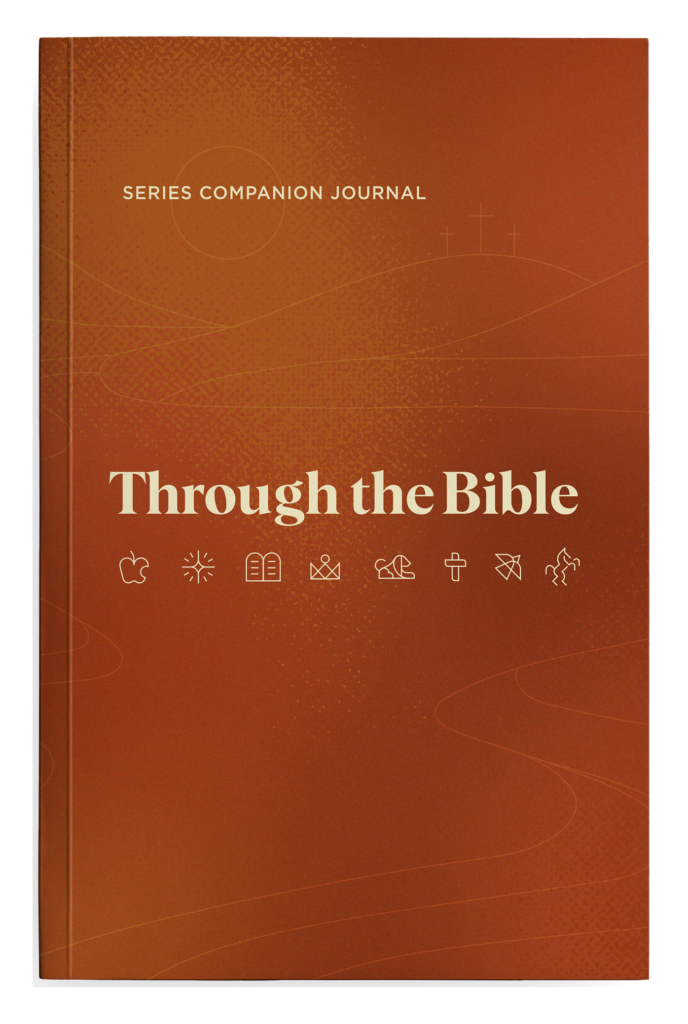
That’s why every Through the Bible series includes a simple Bible reading plan. We intentionally keep it manageable—just one chapter a day—so anyone, regardless of where they are spiritually, can begin building the habit of daily Bible reading.
But the real power is that your entire church is reading the same passages together. Parents and children. Small groups. Sunday school classes. New believers and lifelong Christians. Everyone is journeying through the same portion of Scripture at the same time.
Bible reading, like prayer or exercise, becomes a habit through consistent practice. But habits are much easier to build when people understand why what they’re reading matters.
And that’s where the final decision becomes so important…
3. Provide Biblical Context for all sermons
The Bible wasn’t written as sixty-six disconnected books. It tells one unified story of God’s redemption from Genesis to Revelation. You know that because you’ve spent years studying Scripture. You’ve been to seminary, or read the Bible cover to cover.
Most people in your church haven’t. They know Noah’s ark, David and Goliath, Daniel in the lions’ den, and the miracles of Jesus. But they have no idea how those stories connect or why they are important.
For example, many people don’t realize…
- The Nation of Israel is the descendants of Israel, and they are called “Israel” because Jacob’s name was changed to Israel. And his 12 sons became the 12 tribes.
- The Exodus story is the most referenced Old Testament story in the BIble because Egypt, deliverance, and the Promised Land describe the spiritual journey for every believer.
- Daniel, Shadrach, Meshach, and Abednego are descendants of Abraham (Israel), and they are living in Babylon because after Israel moved into the Promised Land, they began to turn away from God, and finally, after hundreds of years, God allowed them to be defeated and captured.
- John the Baptist declared Jesus as “The Lamb of God who takes away the sins of the world” because every Jew would have understood that lambs were sacrificed to cover sin.
I’ve seen it hundreds of times—when someone has a “lightbulb” moment, people begin to see those connections—their relationship with the Bible changes.
It’s easy to assume our people already know those connections, but most don’t. In every Through the Bible series we produce, we provide context so that no matter the sermon, people understand where it fits in the Bible and the purpose God was trying to accomplish.
If you are a pastor interested in helping your church learn and love the Bible we would love to partner with you. We recommend starting with our flagship series, “Through the Bible.” It is an 8-week series that teaches the main “eras” of Scripture from Genesis to Revelation, and how the stories of the Bible relate to modern life.
Then we recommend preaching any of our Through the Bible collection series once or twice per year. They are Bible-based sermon series taken from the Biblical narrative.
Many of our collections have series companion journals or other resources we recommend to help your congregation engage at a deeper level.